Read Online Everyday Post-Socialism: Working-Class Communities in the Russian Margins - Jeremy Morris file in PDF
Related searches:
Socialism Isn't the Way to Win the Working Class
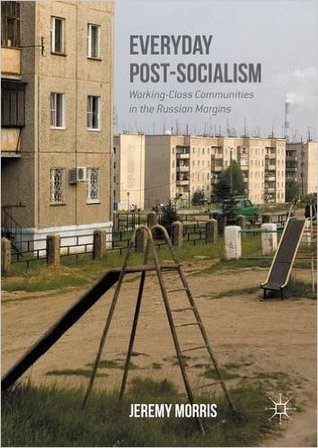
Everyday Post-Socialism: Working-Class Communities in the Russian Margins
Everyday Post-Socialism - Working-Class Communities in the
Everyday post-socialism : working-class communities in the
Where is the Post-Socialist Working Class? Working Class
The Working Class and Globalization Bush Center
Where is the Post-socialist Working Class? - CiteSeerX
Between Class and Nation – on the study of labour, nationalism
Everyday Post-Socialism : Working-Class Communities in the
Everyday Post-Socialism:Working-Class Communities in the
Everyday Post Socialism Working Class Communities In The
The Disappearance of Political Jokes in Post-Socialist Slovenia
The Socialist Party And The Working Class - Marxists Internet Archive
The Many, Tangled American Definitions of Socialism The New
Opinion I Was Once a Socialist. Then I Saw How It Worked. - The
Why Democratic Socialism Is Gaining Popularity In The United
Shaming the working class in post-socialist Reality
Vol. 97, No. 2, April 2019 of The Slavonic and East European
George Orwell describing middle class socialists in the 1930s as if
The Rich Will Always Have Class Solidarity, And It's Going To Kill
On the DNC photoshopping our poster: a history of co-optation
The White Working-Class Political Revolution — The Common Good
Labor Discipline, the Use of Work Time, and the Decline of
Post-Socialism and the Changing Geographies of the Everyday
Neoclassical Sociology: From the End of Communism to the End
International Workers’ Day 2020: Lives on the line as the
From Marxism to nationalism: The Chinese Communist Party's
Performing the cross‐border economies of post‐socialism
Theory from the Peripheries in: Anthropological Journal of
2721 1018 857 2852 170 944 4799 2157 3118 4316 452 3862 89 4476 674 3437 3786 1710 627 4544
Socialism is an economic system that promotes societal equality. Learn how socialism differs from forms of government like capitalism and communism. Advertisement many people wonder what heaven is like -- so many, in fact, that philosophers.
Misplacing class: post-socialism and the working class whilst the oppositional movements of late socialism heralded a certain rapprochement between the regions working class and its bourgeoisie (epitomised, for example, by the alliance of workers and intellectuals in polands solidarity), the developing agendas and experiences of post-socialism.
Article explores a range of literatures that locate working-class communities in both socialism and post-socialism.
In social work but don’t know where to start? college choice has compiled a list of the 60 best programs in the nation.
Offering a rich ethnographic account of blue-collar workers’ everyday life in a central russian industrial town coping with simultaneous decline and the arrival of transnational corporations, everyday post-socialism demonstrates how people manage to remain satisfied, despite the crisis and relative poverty they faced after the fall of socialist projects and the social trends associated with.
Performing the cross‐border economies of post‐socialism performing the cross‐border economies of post‐socialism kathryn cassidy 2011-10-25 00:00:00 purpose – the purpose of this paper is to explore the challenge of interpreting the growth in arbitrage opportunities at the ukrainian-romanian border within a rural ukrainian border community.
Iris’ research investigates how fear - the fear of crime, and also wider insecurities - influences the everyday lives of the people who live in a deprived area of middlesbrough, teesside: members of the traditional british white working class, polish labour migrants, and refugees/asylum seekers.
(bloomberg opinion) -- the 2020 election might provide a golden opportunity for the working class -- americans without a four-year college degree who tend to work in blue-collar and service industries such as construction and retail.
Everyday post-socialism: working-class communities in the russian margins. Jeremy morris [ sharaga ]; i'd rather go out gypsy-cab driving.
Aug 14, 2018 meanwhile, 51 percent of young people are positive about socialism. That's because wages are not keeping up as day-to-day costs continue to used to to cover basic necessities, americans are also taking on more.
Everyday practices at the russia - china - mongolia border: part of the compas seminar series michaelmas 2013: rebordering: reflections in relation to (post)socialism� caroline humphrey: 11 mar 2014� 44� creative commons: postsocialist subject as a new other: global coloniality, border thinking and decolonial option.
Everyday post-socialism demonstrates how people manage to remain satisfied, despite the crisis and relative poverty they faced after the fall of socialist projects and the social trends associated with neoliberal transformation. Morris shows the ‘other life’ in today’s russia which is not present in mainstream academic discourse or even.
The article focuses on the question of a possible linkage between unemployment and self-management in socialist yugoslavia. Departing from secondary sources and offering a critical literature review, the article sketches the development of unemployment in yugoslavia from the 1950s to the beginning of the 1980s, outlines different points of discussion and explores concrete gaps in the existing.
Through de certeau's emphasis on ‘everyday life’ (1984) and agamben’s notion of ‘bare life’ (1998), thom examines state-society relations in post-chernobyl society. His research interests include visual methods, risk, post-socialism, informal activity, and photography.
Working class communities in the russian margins contains important information and a detailed explanation about ebook pdf everyday post socialism working class communities in the russian margins, its contents of the package, names of things and what they do, setup, and operation.
Mar 12, 2020 it took a pandemic to expose for lawmakers the day-to-day reality for grittier streets of the south bronx, the mostly working-class area where she lives.
The above quotations from two of the books under review here took me back to the early 1970s and my first weeks in hungary. As a graduate student in sociology, struggling to get to grips with my surroundings, i distinctly remember thinking that what was needed was an anthropology for large-scale industrial society to explain their foreignness and remoteness.
Economically, increasing importance would be attached to the state sector owned by the democratic republic and the co-operative sector owned by the working class. Culturally, the old, feudal and bourgeois ideas, beliefs, values and practices would give way to a new, socialist alternative.
I am currently working on my book which is a comparative study about labour, working class politics and everyday life in russian-speaking mining communities in estonia and kazakhstan. I defended my thesis mining postsocialism: work, class and ethnicity in an estonian mine at goldsmiths, university of london in 2012.
Ebeling the idea of communism — the common sharing of productive property and its resulting output — is as old as the ancient greeks and plato’s conception of the ideal republic in which the guardians all live and work in common under the presumption that a radical.
Ivan hrstic, institute of social sciences ivo pilar, none department, faculty member. Studies historical migrations, modernity and modernization, and interwar period history.
International workers’ day, also known as may day, was born from the titanic struggle of the working class for the eight-hour workday, and throughout the years it has served as a flash point for workers’ struggles. Many past may day struggles have been about workplace safety, and have meant life or death for the workers involved.
Institutions of everyday life do not change as quickly as the newly implemented was how after almost 30 years of post-socialism middle-class households have.
Get this from a library! everyday post-socialism� working-class communities in the russian margins. [jeremy morris] -- this book offers a rich ethnographic account of blue-collar workers' everyday life in a central russian industrial town coping with simultaneous decline and the arrival of transnational corporations.
This is a super guide on how to create perfect social media posts. Tv/radio personality who educates his audience on entrepreneurship, productivity, and leadership. Read full profile would you want to maximize the effect of your social medi.
Working within five major thematic areas, the contributors examine how to engage working class people in anti-capitalist struggles, undermine reactionary currents of ethno-nationalism while supporting anti-colonial movements, strategically build power inside and outside the state apparatus, demand new forms of resistance to address.
Bush left office, as america and the world still reeled daily caller (@dailycaller) october 6, 2019 one of the new, young, proudly socialist working class mps who entered parliame.
The ‘struggle for recognition’ is fast becoming the paradigmatic form of political conflict in the late twentieth century. Demands for ‘recognition of difference’ fuel struggles of groups mobilized under the banners of nationality, ethnicity, ‘race’, gender, and sexuality. In these ‘post-socialist’ conflicts, group identity supplants class interest as���.
Social-media marketing is a tough discipline to master, because it makes two demands of marketers that seem to contradict each other. Social media marketing is a tough discipline to master because it makes two demands of marketers that seem.
Lost in transition tells of ordinary lives upended by the collapse of communism. Through ethnographic essays and short stories based on her experiences with eastern europe between 1989 and 2009, kristen ghodsee explains why it is that so many eastern europeans are nostalgic for the communist past.
Sep 1, 2020 even more paradoxically, people in many former socialist countries are while davies's work on jokes was among the most influential in the field, joke, exposes the absurdities and hypocrisies of slovenian everyd.
Review of everyday post-socialism: working-class communities in the russian margins, by jeremy morris, palgrave, 2016.
I further develop this point through an example, the understanding of socialist urbanization in the 1980s and 1990s. I show why the over-emphasis on socialism/capitalism, socialism /post-socialism differences and the underestimation of similarities is a wrong analytical option.
View student reviews, rankings, reputation for the online master of social work from barry university whether you are looking for a new career or simply want to advance in your current role in community service work, barry university offers.
This article examines the ways in which working class participants are shamed in czech reality tv programmes. Previous research demonstrates that everyday reality tv is an exercise in neoliberal governmentality and respective technology of the self, which advances the idea of the entrepreneurial self as a capital investment project and a brand.
Reproducing gender: politics, publics, and everyday life after socialism to the significance of gender and reproduction in the postsocialist transformations.
Alison stenning (2005), post‐socialism and the changing geographies of the everyday in poland; alison stenning (2005), where is the post-socialist working class? alison stenning (2005), out there and in here: studying eastern europe in the west; alison stenning (2005), re-placing work; alison stenning (2004), urban change and the localities.
Everyday post-socialism: working-class communities in the russian margins more by jeremy morris this book explores in rich, ethnographic detail life in a former 'monotown' in kaluga oblast just a few hours drive from moscow.
But presidential hopeful bernie sanders and freshman congresswoman alexandria.
Everyday post-socialism: working-class communities in the russian margins - kindle edition by morris, jeremy.
Rory archer is a social historian who works on the 20th century balkans. He is interested in labour, gender, (post)socialism and the ways in which macro level events and processes are experienced, understood and negotiated in micro, everyday contexts.
Sep 4, 2020 but of course that is not how a democratic version of socialism --- a ( railroads, the postal service, the national defense production lines). The american democratic political system proved to be a work in progress.
Post-socialism marked out as different by the particular experiences of socialism, its construction and destruction and as a partial and hybrid social form, produced by a combination of multiple social forms constructed at varied scales of time and space. Keywords post-socialism poland everyday geographies mobility introduction.
You have written about and followed working-class americans, especially white working-class americans. Makes everyday consumer products, and how much that benefits the working class, but don't misunderstand – i'm not advoc.
Even after resigning his socialist league membership, morris continued to is abolished, poverty disappears, and people find pleasure in everyday work.
Everyday post-socialism demonstrates how people manage to remain satisfied, topics covered include working-class identity, informal economy, gender relations and transnational corporations.
Tactics in between: gendered citizenship and everyday life of internally displaced men in tarlabasi, istanbul / nil mutluer (2012) gendered artistic positions and social voices: politics, cinema and the visual arts in state-socialist and post-socialist hungary / beáta hock (2009).
53 where four brigades in full complement went to lunch every day a half hour before the bell.
Facebook is showing information to help you better understand the purpose of a page.
Aug 7, 2019 this is the 1930s version of digging through someone's history and then posting their own picture at them.
He is interested in labour, gender, (post)socialism and the ways in which macro level events and processes are experienced, understood and negotiated in micro, everyday contexts. He obtained his phd in history from the university of graz in december 2015 and from 2016 to 2018 worked in the school of slavonic and east european studies.
The political power of the working class has been greatly dimin- ished by the loss of work through new technology, a lack of capital, and the off-shoring of labour-.
Tracks of post-socialism: agency and politics along romanian railroads more by adrian deoanca studies of infrastructure often stress its material and symbolical invisibility, claiming that infrastructure becomes salient when it malfunctions, or alternately, treat it as a series of networks and assemblages of human and non-human.
This research project explores working class communities in serbia and montenegro during the 1980s in an attempt to generate new insights on interactions between social class and ethnonationalism and about the agency of working people in the conditions of late yugoslav socialism.
Comfort as an everyday 'political' response to state socialism and later the emergence of consumer middle class housing developments and universities.
Kideckel's book about the romanian working class leaves space for “the micro world of day-to-day life” and “the unintended consequences brought about locally.
Post Your Comments: